SAP S/4HANA Implementation Services
We deliver end-to-end services to help enterprises deploy SAP S/4HANA, the next generation of SAP ERP. Our team has expertise across modules and technologies to help clients deliver within agreed budget and timeline while meeting requirements. Implementation follows a phased approach - project assessment, blueprint, realization, cutover, and operation - minimizing disruption to your business and supporting a smooth transition to S/4HANA with sustained support to improve return on investment.
SAP S/4HANA is a next-generation ERP system built on the in-memory platform that delivers real-time insights, a single source of truth, and a modern user experience. For organizations running older SAP ECC releases, the move to S/4HANA is no longer optional — it is the strategic foundation for digital transformation, advanced analytics, and tighter integration across finance, supply chain, and operations. As a professional SAP implementation service provider, we use the SAP Activate methodology to deliver full-lifecycle implementation services that ensure successful deployment. Our expert team combines functional and technical capabilities to provide end-to-end solutions tailored to your unique business needs, whether you are starting from a legacy system, selecting a new ERP, or converting an existing ECC landscape.
Module Specialist Team
SAP S/4HANA covers a vast range of modules — no single consultant can master all of them. Our implementation team staffs each module with a dedicated specialist who has hands-on configuration experience in that area:
FI/CO Finance
General ledger, AP/AR, asset accounting, cost centers, profit centers, internal orders, product costing — experienced with the Universal Journal and Margin Analysis migration.
MM Materials
PR, PO, vendor master, inventory management, invoice verification — familiar with classic MM vs S/4HANA new material ledger differences.
SD Sales
Sales orders, delivery, billing, customer master, pricing — experienced with end-to-end Order-to-Cash configuration.
PP Production
Production orders, BOM, routing, MRP, repetitive manufacturing — experienced with discrete vs process manufacturing configurations.
ABAP Development
User exits, BAdI, custom reports, forms, RICEFW objects — handles enhancement development as well as code cleanup for migration.
Integration
IDoc, RFC, OData, BTP integration — designs and debugs interfaces between SAP and adjacent systems (CRM, e-commerce, WMS, MES).
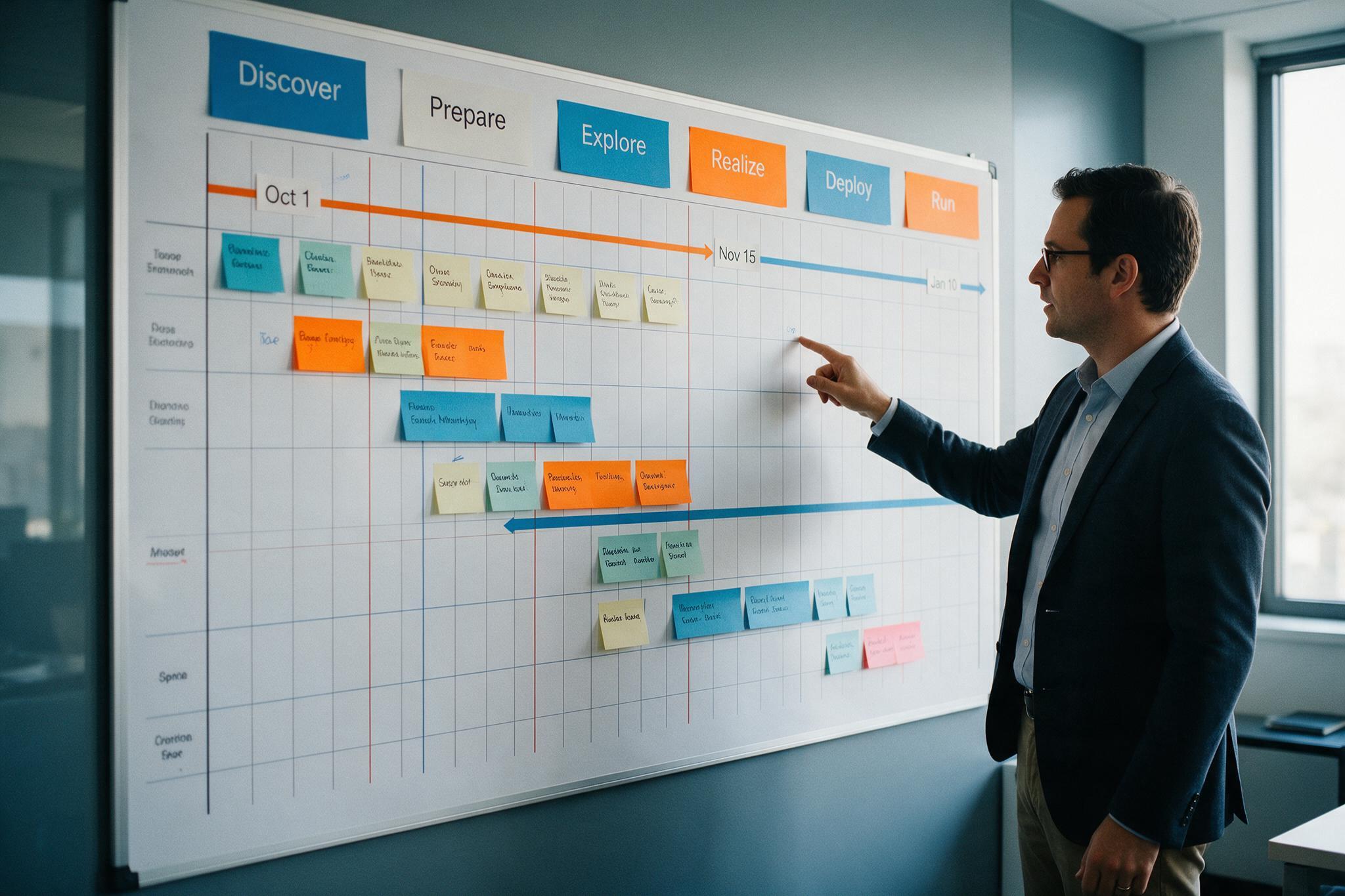
Six-Phase Implementation Path
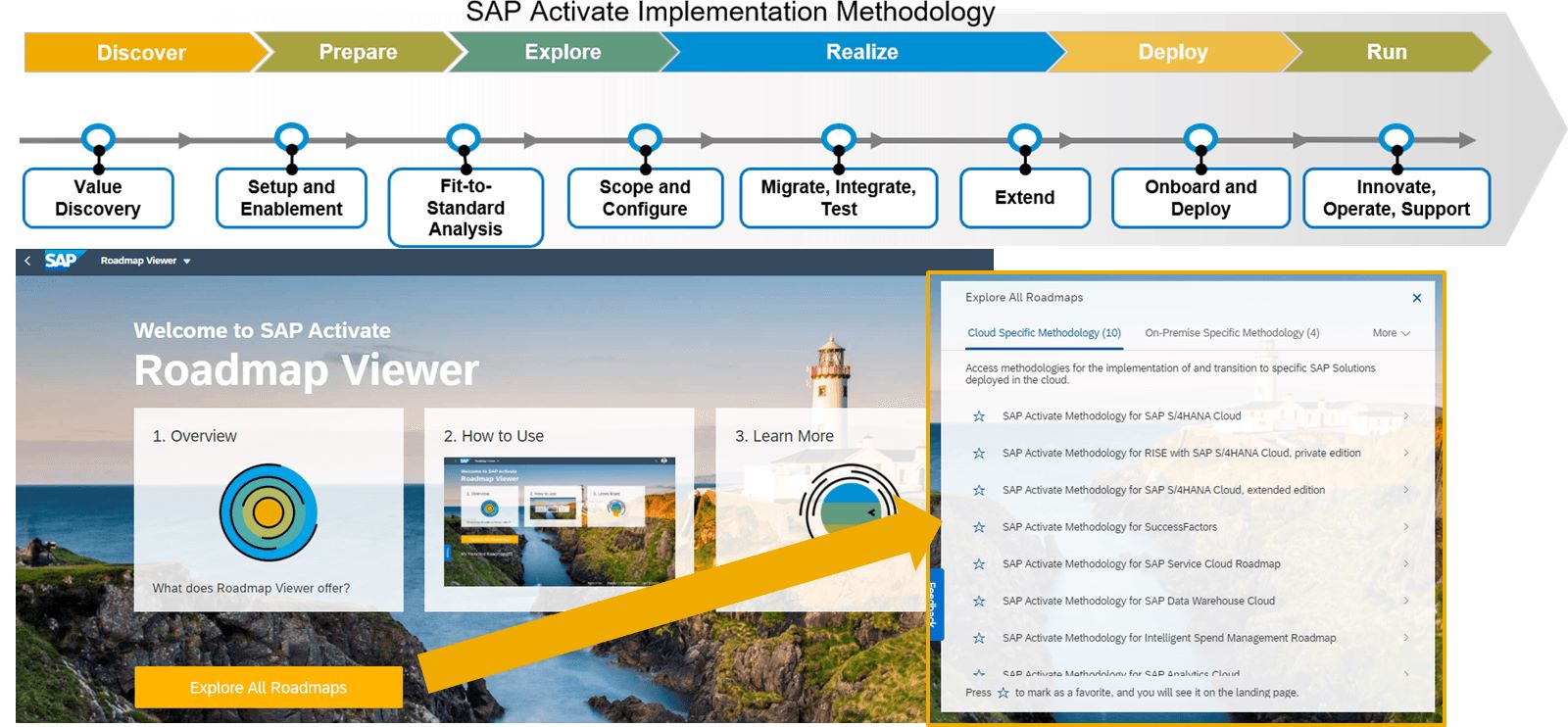
Our implementation process follows the SAP Activate methodology, organized into six phases, each with defined deliverables, quality gates, and stakeholder sign-offs so that progress remains transparent and risks surface early rather than accumulating before go-live:

Testing Management and Data Governance
The parts of an implementation project most likely to fail are testing and data. Our test management is not "click through a few screens": from unit testing (consultants self-testing), to integration testing (business processes tested end-to-end), to UAT (business teams working in a realistic data environment), every round is backed by test scripts and defect tracking.
On the data governance side, we begin preparing migration templates as early as the blueprint phase: which master data needs cleansing, which historical data to archive, and how opening balances are loaded. Our data migration toolkit automatically validates field completeness, referential links, and cross-table reconciliation, so data problems are caught during upload rather than surfacing in the production system.
Why SUREINFO
Core consultants on the SUREINFO team bring years of SAP project experience, spanning ECC upgrades, new implementations, Central Finance, and system conversions; some hold SAP module certifications (certificate list available on request). We do not simply deliver a system to blueprint — we engage in business process diagnosis early in the project and, drawing on common practices from manufacturing, pharmaceuticals, retail, and other industries, help clients find the balance between "fit-to-standard first, customization second."
On methodology, we align SAP Activate with our clients' own project governance framework: in the Discover phase we align executive expectations through workshops, in Explore we validate solutions quickly through Fit-to-Standard, and in Deploy we run multiple full regression cycles and cutover rehearsals. This cadence means clients see demonstrable, reviewable outputs at every stage — rather than discovering problems only before go-live.
Typical Customer Scenarios
Many of our projects serve manufacturing companies upgrading from SAP ECC to S/4HANA. These customers face the dual challenge of simplifying legacy customizations while adapting to new data models such as the Universal Journal (ACDOCA), new asset accounting, and the simplified material ledger. We typically run brownfield conversions for mature plants with stable processes, and selective data transition for groups that want to clean up master data and reorganize company structures. Beyond manufacturing, we support discrete and process industries, consumer products, and engineering firms that need real-time planning and tighter integration between procurement, production, sales, and finance. In each engagement, we help clients decide between a new implementation, a system conversion, or a selective transition based on their system landscape, master-data quality, and business goals — avoiding a one-size-fits-all migration that later proves to be more expensive than planned.